ViaSat Enhances LinkStar System

ViaSat Enhances LinkStar System


ViaSat's newly enhanced LinkStarS2 VSAT networking system incorporates the new DVB-S2 waveform, offering up to 30% greater bandwidth efficiency and substantially reducing network operating costs. The S2-capable LinkStar hub integrates remote LinkWayS2 mesh VSAT terminals into the same network, enabling flexible hybrid star/mesh network architectures.

ViaSat Linkstar S2LinkStarS2 and LinkWayS2 can now interoperate seamlessly, offering maximum network design flexibility. ViaSat's LinkWay broadband IP mesh network is meeting the needs of business, military, and government clients with applications ranging from broadband IP enterprise networks to distance learning. The addition of a DVB-S2 receiver to LinkWay enables hybrid star/mesh networks managed by a single LinkStarS2 hub.

The LinkStar S2 system builds on the leading DVB-RCS capable VSAT system, with over 100 networks and 75,000 remote terminals worldwide. The new S2-capable LinkStar S2 hubs and remote terminals are compatible with standard DVB-S LinkStar remotes and offer a simple, cost effective transition to the benefits of DVB-S2.

DVB-S2 is the latest advance in transmission technique from the Digital Video Broadcasting Project industry consortium and features a variety of technology enhancements over the current DVB-S standard. The new standard is designed to cut the cost-per-bit to transmit data by satellite by providing more efficient use of satellite transponders.

ViaSat has a full line of VSAT products for data and voice applications, and is a market leader in Ka-band satellite systems, from user terminals to large gateways.

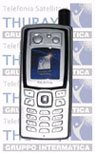
Thuraya SG-2520 World’s First Satellite Smartphone


SO-2510 introduces breakthrough technology in the new Thuraya SatPhone, setting the standards for the smallest and most robust satellite handset in the industry. The premium SG-2520 handset will support Thuraya and GSM 900/1800/1900 networks, will be GPRS-capable and will run on a Windows-based operating system. It will be the first satellite phone with color display and built-in camera.

thuraya SO-2510The new generation Thuraya handset is powerful and compact, offering total convenience and mobility. With Thuraya, you can enjoy uninterrupted, seamless, border-to-border satellite telecommunication services in more than 110 nations in Europe, North, Central Africa and large parts of Southern Africa, the Middle East, Central and South Asia. The new Thuraya SatPhone opens up the boundaries in communication, enabling you to go even further.
The company gained worldwide prominence when it was reported that members members of some terrorist networks used Thurayas, as they are harder to pinpoint the location of than regular cell phones.

Telefonia Satellitare keeps on keepin' on with their dual-mode GSM satellite phones. We're hesitant to call the GSM aspect worthy of the title "worldphone" because it's tri-band, but the devices do feature GPS, GPRS, USB connections, Bluetooth, and a 1.3 megapixel camera; the smaller 2510 is the budget handset. Buy it to call your mom from the top of Everest, dude!

ICG Transceivers Integrated With Chelton Data Systems

International Communications Group (ICG) announced this week its AeroCom 3000, AeroCom 1100 and NxtLink 400 Iridium transceivers have been successfully tested and integrated with Chelton's high speed data systems for both voice and data communications. Satellite calls may be placed in Inmarsat Or Iridium equipment.

The successful integration was completed utilizing ICG's Sigma 7BL, Sigma7, Jetphone and Cordless handsets. This integration provides greater flexibility and redundancy for airborne executives flying on aircraft equipped with Chelton equipment since the ICG PBX devices can be used to place and receive calls on either the Inmarsat or Iridium satellite systems.

ICG's NxtLink 400 incorporates four Iridium transceivers with an internal CTU that permits up to ten telephone connections for voice or data. The AeroCom 3000 and AeroCom 1100 cabin telecommunications units (CTU) provides communications automation, medium integration and transceiver management facilities for aeronautical applications. Operational with a variety of standard telephony devices, the CTUs replicate the conveniences and services offered by a contemporary "executive-office" communications systems in an aircraft cabin. Chelton's high-speed data Inmarsat Swift 64 satcom systems are comprised of a high gain antenna, SDU-7300 satellite data unit, HPA-7400 high power amplifier and a DLNA diplexer/low noise amplifier. The Chelton HSD-7000 system used for the integration testing provides two 64K channels that can be expanded to four total channels.

Tivo Wins Out Over Dish Network

Dish Network may finally have to pay up after losing a federal court decision today. The Court of Appeals ruled that Dish Network, formerly Echostar Communications Inc, infringed on Tivo's patent on DVR technology. Interestingly, the court ruled partially in favor of Dish Network, in that it overturned a lower court's ruling that Dish had infringed on the hardware elements of the patent. But the court ruled that the violation of the software elements was still sufficient enough to uphold the $89.6 million in damages previously awarded to Tivo by the lower court.

The news sent Tivo's stock up nearly 29%. The suit originated in 2004 when Tivo claimed Dish Network infringed on the company's digital video recorder technology. DishDVR technology allows viewers to record one channel while watching another, as well as pause and rewind live TV, and skip through commercials on previously recorded material.

Dish Network remained defiant after the ruling, claiming it would not affect their DVR subscribers because they had already moved their base to "next generation" DVR software that does not infringe on Tivo's patents. Dish Network also said they plan to appeal the financial judgment.

Bin Laden & His Satellite Phone System

Bin Laden & His Satellite Phone System


While Osama bin Laden, and other al Qaeda and Taliban leaders may be hiding out in the mountains along the Afghan-Pakistan border, they are not cut off from the outside world. For a few thousand dollars, you can put together a a portable, solar powered, Internet connection. Weighing less than twenty pounds, it can be stuffed into a backpack and carried anywhere. Using solar panels, a satellite phone and a laptop, and you are connected. Satellite phone companies now provide higher data speeds. Not quite DSL, but you can move all the data a terrorist mastermind requires for communication and propaganda.


The terrorists know that Western intelligence agencies are all over the satellite phone systems. But by using code words, and encrypting the messages, much information can be exchanged without unacceptable risk. Moreover, the phones themselves can be used at a distance from the hideouts, lest the Americans are plotting the location of the phone, and have a missile armed Predator UAV nearby.
The intel people won't comment on this, especially any success they may have breaking the multiple layers of encryption, or doing an analysis of transmission locations. At the same time, such portable Internet set-ups are also useful for Western counter-terrorism forces operating in the back-country. U.S. Army Special Forces often have small teams doing stake outs in the outback, and Internet access is essential for getting and sending information.

Globalstar degradation of the amplifiers

Globalstar - degradation of the amplifiers


One thing you really want to have as a satellite communications company is a nice collection of well-functioning satellites. Without them, to state the incredibly obvious, you own a nice collection of space junk. And that is the problem that now faces GlobalStar, the satellite communications provider.

On Feb 7th, 2007 the company filed an incredible 8-K document with the SEC. In a section labeled “Satellite Constellation Operations,” the company made some disturbing disclosures. Globalstar has previously said that a number of its satellites have suffered from degradation of performance of power amplifiers to the S-band antenna which provides the downlink to subscriber phones or data terminals.

The result can be reduced quality and call duration. If the S-band antenna stops working, then you can’t have a two-way conversation using the specific satellite. GlobalStar conjectures that the amplifier problem might relate to irradiation in orbit, but it isn’t entirely sure. The company says it has managed the issue in various ways, including placing spare satellites already in orbit into service and moving its satellites to different orbits. Previously, the company has said that with the addition of eight spare satellites planned for launch in 2007, two-say service would be viable until a set of next-generation satellites were placed into service in 2009.

And now, the punch line: Based on data recently collected from satellite operations, the Company has concluded that the degradation of the amplifiers is now occurring at a rate that is faster than previously experienced and faster than the Company had previously anticipated. In response, the Company, in consultation with outside experts, has implemented innovative methods, and plans to continue to implement additional corrective measures, to attempt to ameliorate this problem, including modifying the configuration of its constellation as described above, and thereby extend the life of the two-way communication capacity of the constellation. Nonetheless, to date the Company has been unable to correct the amplifier problem and may be unable to do so.

GlobalStar says it is “exploring the feasibility of accelerating procurement and launch of its second-generation satellite constellation, to attempt to reduce the effects of this problem upon its customers and operations.” It says the company “will be able to forecast the duration of service coverage at any particular location in its service area and intends to make this information available without charge to its service providers, including its wholly owned operating subsidiaries, so that they may work with their subscribers to reduce the impact of the degradation in service quality in their respective service areas.”

Satellite phone makes high-speed Internet connection

Satellite phone makes high-speed Internet connection

At 130 gr, it's the world's smallest Satellite phone and last week, Thuraya made a high-speed Internet connection through it. It was the world's first such call and yet another feat for the rapidly expanding company. Thuraya's second generation phones will become a new favorite with Himalayan expeditions and limited numbers of the SO-2510 were introduced to the market recently ahead of its full commercial launch in September.

Wednesday, Project Manager Ahmed Mansoor Al Abd and his team made the first successful 'packet call' on the SO-2510 handset (packet call refers to the data transmission technology known as GPRS, or General Packet Radio Service). Until now, such connections were only possible through latest GSM phones or special satellite kits like ThurayaDSL, which provides high-speed data service; or high speed modems such as BGANS. 'We were able for the first time to browse the Internet and download files,' Mansoor Al Abd said. Handset users can download information at speeds of up to 60Kbps and upload at about 15Kbps. Thuraya will initially offer a basic GPRS service to the second-generation handset users for an additional fee. Plans are also underway for introducing a number of GPRS-based advanced features.