Bell ExpressVu launched its new 9242 HD PVR

Bell ExpressVu launched its new 9242 HD PVR


Bell ExpressVu is replacing its dual-tuner 9200 HD PVR with a new model: the 9242, which adds five hours more of high-definition recording, and 20 additional hours of standard definition recording. Like its predecessor, the 9242 allows ExpressVu customers to view one program while simultaneously recording up to two others. One program can also be viewed in one room, while a second is being recording in another, all using the same receiver. As with other PVR models, there's the ability to pause live television, fast forward and rewind at up to four speeds, skip forward and back, and view in slow motion, which is ideal for catching a great sports play that's worth a second look. Other options include split-screen functionality and picture-in-picture for catching two programs at once; as well as USB 2.0 and Ethernet connectivity.

Right out of the box, the 9242 sets the bar for state-of-the-art high definition PVR performance in Canada even higher,but its true potential lies down the road. The real story is what Bell ExpressVu can build upon, and the extra services they can deliver via the USB and Ethernet connectivity. Bell's new HDTV receiver and its feature set simply deliver the most advanced digital TV viewing experience.

With picture quality ten-times better than regular cable, the most HD channels available, and the best HD PVR, Bell offers Canadians the full HD experience. Bell ExpressVu's new 9242 HD PVR is currently available for purchase at $599; or for rent at $20/month.

Inmarsat's I-4 fleet

Inmarsat's I-4 fleet

This is the first of Inmarsat's 4th generation satellite fleet, was launched in March 2005 and subsequently went into service over the Indian Ocean. This fleet includes two latest generation satellites, the Inmarsat-4s (I-4s), which were launched in 2005. Together, they provide coverage to around 85 per cent of the world's landmass and 98 per cent of the world's population. That dish antenna is 9 meters across, the array of solar panels extend 45 meters. The flap at far left is a "sail", able to "harness pressure exerted by particles from the Sun - the solar wind - to steer the I-4 and fine-tune its orbital position". This bird is already improving existing Inmarsat service in its planet print, and shows its stuff in terms of high speed data.

Inmarsat is also planning to launch a third I-4 satellite in 2008. This will deliver complete mobile broadband coverage of the planet, except for the extreme polar regions. Inmarsat's first wholly owned satellites, the Inmarsat-2s, were launched in the early 1990s, and the Inmarsat-3s - the first generation to use spot beam technology - followed later in the decade.

The total fleet now comprises 10 satellites. The I-4s set a new benchmark for mobile satellite communications in terms of their power, capacity and flexibility. One I-4 satellite is 60 times more powerful than an Inmarsat-3, and the I-4 fleet is expected to have a commercial life until around 2020.

Spaceway 3

Spaceway 3

Spaceway, built by Hughes Corporation, is a family of next generation satellites already in space for use with satellite internet and satellite TV. Spaceway-1 and Spaceway-2 are used by DirecTV to provide Satellite Television and HD TV service. Spaceway-3 provides additional bandwidth for HughesNet High Speed Satellite Internet subscribers. The new HN9000 modem will be used to access the High Speed Internet provided by Spaceway-3. If you are a new customer using the HN9000 modem we would like comments and customer feedback on this blog. If you are considering becoming a new Hughes Satellite Internet customer and have more questions about Spaceway service, please leave your comments on this blog and our team will do our best to answer them. You can also see Wikipedia Spaceway for more information.

New Mobile Internet Antenna

New Mobile Internet Antenna


mobile satellite internet antenna
A small canadian company has announced the availability of its latest iNetVu Mobile satellite antenna platforms, which was developed to work with the new Ka frequency band, a breakthrough satellite communications technology.

The iNetVu Ka66 has been designed to take advantage of this new satellite service which delivers dramatic improvements in two-way, high-speed Internet services for consumers and businesses throughout North America. The Ka66 Mobile Platform has been tested over Telesat Canada's Anik F2 Satellite.

The iNetVu Ka66 will be able to deliver two-way satellite based Internet solutions, VoIP and Video cost effectively, using a low profile mobile or transportable antenna system that can deliver comparable performance to significantly larger and more expensive products. Users of the iNetVu Ka66 mobile satellite Internet platforms will be able to automatically locate the satellite from a vehicle or moveable structure by a simple push of a button and be instantly and securely connected to the Internet at broadband speeds.

ViaSat Enhances LinkStar System

ViaSat Enhances LinkStar System


ViaSat's newly enhanced LinkStarS2 VSAT networking system incorporates the new DVB-S2 waveform, offering up to 30% greater bandwidth efficiency and substantially reducing network operating costs. The S2-capable LinkStar hub integrates remote LinkWayS2 mesh VSAT terminals into the same network, enabling flexible hybrid star/mesh network architectures.

ViaSat Linkstar S2LinkStarS2 and LinkWayS2 can now interoperate seamlessly, offering maximum network design flexibility. ViaSat's LinkWay broadband IP mesh network is meeting the needs of business, military, and government clients with applications ranging from broadband IP enterprise networks to distance learning. The addition of a DVB-S2 receiver to LinkWay enables hybrid star/mesh networks managed by a single LinkStarS2 hub.

The LinkStar S2 system builds on the leading DVB-RCS capable VSAT system, with over 100 networks and 75,000 remote terminals worldwide. The new S2-capable LinkStar S2 hubs and remote terminals are compatible with standard DVB-S LinkStar remotes and offer a simple, cost effective transition to the benefits of DVB-S2.

DVB-S2 is the latest advance in transmission technique from the Digital Video Broadcasting Project industry consortium and features a variety of technology enhancements over the current DVB-S standard. The new standard is designed to cut the cost-per-bit to transmit data by satellite by providing more efficient use of satellite transponders.

ViaSat has a full line of VSAT products for data and voice applications, and is a market leader in Ka-band satellite systems, from user terminals to large gateways.

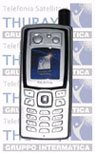
Thuraya SG-2520 World’s First Satellite Smartphone


SO-2510 introduces breakthrough technology in the new Thuraya SatPhone, setting the standards for the smallest and most robust satellite handset in the industry. The premium SG-2520 handset will support Thuraya and GSM 900/1800/1900 networks, will be GPRS-capable and will run on a Windows-based operating system. It will be the first satellite phone with color display and built-in camera.

thuraya SO-2510The new generation Thuraya handset is powerful and compact, offering total convenience and mobility. With Thuraya, you can enjoy uninterrupted, seamless, border-to-border satellite telecommunication services in more than 110 nations in Europe, North, Central Africa and large parts of Southern Africa, the Middle East, Central and South Asia. The new Thuraya SatPhone opens up the boundaries in communication, enabling you to go even further.
The company gained worldwide prominence when it was reported that members members of some terrorist networks used Thurayas, as they are harder to pinpoint the location of than regular cell phones.

Telefonia Satellitare keeps on keepin' on with their dual-mode GSM satellite phones. We're hesitant to call the GSM aspect worthy of the title "worldphone" because it's tri-band, but the devices do feature GPS, GPRS, USB connections, Bluetooth, and a 1.3 megapixel camera; the smaller 2510 is the budget handset. Buy it to call your mom from the top of Everest, dude!

ICG Transceivers Integrated With Chelton Data Systems

International Communications Group (ICG) announced this week its AeroCom 3000, AeroCom 1100 and NxtLink 400 Iridium transceivers have been successfully tested and integrated with Chelton's high speed data systems for both voice and data communications. Satellite calls may be placed in Inmarsat Or Iridium equipment.

The successful integration was completed utilizing ICG's Sigma 7BL, Sigma7, Jetphone and Cordless handsets. This integration provides greater flexibility and redundancy for airborne executives flying on aircraft equipped with Chelton equipment since the ICG PBX devices can be used to place and receive calls on either the Inmarsat or Iridium satellite systems.

ICG's NxtLink 400 incorporates four Iridium transceivers with an internal CTU that permits up to ten telephone connections for voice or data. The AeroCom 3000 and AeroCom 1100 cabin telecommunications units (CTU) provides communications automation, medium integration and transceiver management facilities for aeronautical applications. Operational with a variety of standard telephony devices, the CTUs replicate the conveniences and services offered by a contemporary "executive-office" communications systems in an aircraft cabin. Chelton's high-speed data Inmarsat Swift 64 satcom systems are comprised of a high gain antenna, SDU-7300 satellite data unit, HPA-7400 high power amplifier and a DLNA diplexer/low noise amplifier. The Chelton HSD-7000 system used for the integration testing provides two 64K channels that can be expanded to four total channels.