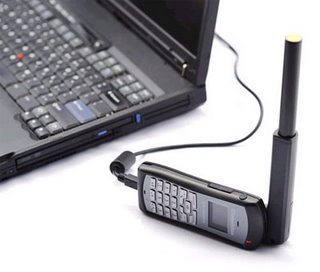
Bin Laden & His Satellite Phone System

Bin Laden & His Satellite Phone System


While Osama bin Laden, and other al Qaeda and Taliban leaders may be hiding out in the mountains along the Afghan-Pakistan border, they are not cut off from the outside world. For a few thousand dollars, you can put together a a portable, solar powered, Internet connection. Weighing less than twenty pounds, it can be stuffed into a backpack and carried anywhere. Using solar panels, a satellite phone and a laptop, and you are connected. Satellite phone companies now provide higher data speeds. Not quite DSL, but you can move all the data a terrorist mastermind requires for communication and propaganda.


The terrorists know that Western intelligence agencies are all over the satellite phone systems. But by using code words, and encrypting the messages, much information can be exchanged without unacceptable risk. Moreover, the phones themselves can be used at a distance from the hideouts, lest the Americans are plotting the location of the phone, and have a missile armed Predator UAV nearby.
The intel people won't comment on this, especially any success they may have breaking the multiple layers of encryption, or doing an analysis of transmission locations. At the same time, such portable Internet set-ups are also useful for Western counter-terrorism forces operating in the back-country. U.S. Army Special Forces often have small teams doing stake outs in the outback, and Internet access is essential for getting and sending information.

Globalstar degradation of the amplifiers

Globalstar - degradation of the amplifiers


One thing you really want to have as a satellite communications company is a nice collection of well-functioning satellites. Without them, to state the incredibly obvious, you own a nice collection of space junk. And that is the problem that now faces GlobalStar, the satellite communications provider.

On Feb 7th, 2007 the company filed an incredible 8-K document with the SEC. In a section labeled “Satellite Constellation Operations,” the company made some disturbing disclosures. Globalstar has previously said that a number of its satellites have suffered from degradation of performance of power amplifiers to the S-band antenna which provides the downlink to subscriber phones or data terminals.

The result can be reduced quality and call duration. If the S-band antenna stops working, then you can’t have a two-way conversation using the specific satellite. GlobalStar conjectures that the amplifier problem might relate to irradiation in orbit, but it isn’t entirely sure. The company says it has managed the issue in various ways, including placing spare satellites already in orbit into service and moving its satellites to different orbits. Previously, the company has said that with the addition of eight spare satellites planned for launch in 2007, two-say service would be viable until a set of next-generation satellites were placed into service in 2009.

And now, the punch line: Based on data recently collected from satellite operations, the Company has concluded that the degradation of the amplifiers is now occurring at a rate that is faster than previously experienced and faster than the Company had previously anticipated. In response, the Company, in consultation with outside experts, has implemented innovative methods, and plans to continue to implement additional corrective measures, to attempt to ameliorate this problem, including modifying the configuration of its constellation as described above, and thereby extend the life of the two-way communication capacity of the constellation. Nonetheless, to date the Company has been unable to correct the amplifier problem and may be unable to do so.

GlobalStar says it is “exploring the feasibility of accelerating procurement and launch of its second-generation satellite constellation, to attempt to reduce the effects of this problem upon its customers and operations.” It says the company “will be able to forecast the duration of service coverage at any particular location in its service area and intends to make this information available without charge to its service providers, including its wholly owned operating subsidiaries, so that they may work with their subscribers to reduce the impact of the degradation in service quality in their respective service areas.”

Satellite phone makes high-speed Internet connection

Satellite phone makes high-speed Internet connection

At 130 gr, it's the world's smallest Satellite phone and last week, Thuraya made a high-speed Internet connection through it. It was the world's first such call and yet another feat for the rapidly expanding company. Thuraya's second generation phones will become a new favorite with Himalayan expeditions and limited numbers of the SO-2510 were introduced to the market recently ahead of its full commercial launch in September.

Wednesday, Project Manager Ahmed Mansoor Al Abd and his team made the first successful 'packet call' on the SO-2510 handset (packet call refers to the data transmission technology known as GPRS, or General Packet Radio Service). Until now, such connections were only possible through latest GSM phones or special satellite kits like ThurayaDSL, which provides high-speed data service; or high speed modems such as BGANS. 'We were able for the first time to browse the Internet and download files,' Mansoor Al Abd said. Handset users can download information at speeds of up to 60Kbps and upload at about 15Kbps. Thuraya will initially offer a basic GPRS service to the second-generation handset users for an additional fee. Plans are also underway for introducing a number of GPRS-based advanced features.

Satellite Internet

DiRECWAY - HughesNet - Starband - iDirect - Linkstar


Satellite Internet with an edge for small office/home office.

DiRECWAY Internet via satellite Home Edition provides premium performance at a value price. This satellite Internet service is versatile enough to be used in your store, small office, or home office and ideal for families and teleworkers.

With Satellite Internet service no need to keep your phone busy

With a DiRECWAY 2-Way satellite connection, you won't tie up your primary phone line or need to install an expensive second line for your Internet connection. Stay connected as long as you like without worrying about missing important phone calls. No more waiting for an old-fashioned Internet dial-up connection. Keep calling!

Satellite Internet Connection Product Features

To get connected all you need is a DiRECWAY satellite dish (typically a 0.74m dish) installed at your home or office so it faces the southern sky. Coaxial lines connect your dish to a "satellite modem". This modem is directly connected to your PC. No phone lines are needed after initial set-up. The satellite Internet system is installed and activated by expert installers. Unlike one-way Internet via satellite, 2-Way DiRECWAY satellite Internet offers download and upload capabilities straight from the dish. This means that no phone lines are required to surf the net, or to send important files and emails to friends, customers and suppliers.

Broadband Satellite Internet Speed

Isn't it time to let go of that slow phone modem? DiRECWAY satellite Internet service gives you a broadband connection, so you can get more excitement out of the Internet than you ever thought possible - without the wait or hassle.
2-Way DiRECWAY service allows users to download Internet content at speeds of up to 400++ kbps. That's 8 times faster than the average modem. The DiRECWAY broadband satellite system provides a satellite return channel with upload speeds rated at up to 128 kbps (50-70Kbps typical). This is still considerably faster than most modems. You can now download a 2MB file in just 30 to 40 seconds.

Broadband Satellite Internet Speed

The satellite communications industry is a mature and stable one. For decades, satellites have been used to transport analog voice and video signals around the globe, providing excellent quality and reliability. Reliability of the actual satellites once placed in operation approaches 100%. Failures have almost always occurred during launch or prior to deployment of services. In addition to voice and video signals, satellites have been successfully used to transport data for many years. Everyone has seen the dishes on top of gas stations and convenience stores that are used for low-speed transactions such as credit card approvals. With the advent of the Internet, satellite technology companies have added broadband IP support making it possible for even the most remote locations to participate in the World Wide Web.
Most legacy broadband satellite solutions have been built by piggybacking IP on top of DVB satellite technology, which was designed for television video. These solutions are inefficient and sluggish, and generally provide poor uplink performance and lack support for applications such as VoIP. New technology from iDirect, developed from the ground up to support IP over satellite, has had the effect of upgrading performance in a manner that is similar to the upgrade from a shared Ethernet hub to a switch. The resulting solution provides enterprise class quality and reliability.

Since the satellite Internet era began, we have offered a complete line of broadband satellite Internet equipment and service levels.

We are a full-service broadband satellite Internet access provider, with satellite Internet service deployed to thousands residential users.

We offer satellite Internet services powered by the award-winning DiRECWAY platform from Hughes Network Systems. Satellites include the Eutelsat W1, Galaxy 11, Galaxy 4R, and Horizons 1 operated by PanAmSat, as well as the SATMEX5 satellite.
source http://www.highspeedsat.com/satellite-internet.htm


The smallest satellite telephone GSP-1700

Satellite phones have traditionally been big, bulky monsters that look more like bricks than actual phones. But just like their cellular phone cousins, satellite phones are also getting smaller. When you hit the road, you make do with our ordinary GSM handsets for voice calls, but that strategy doesn't always work when you are reporting from, say, the rural fringes of Kazakhstan.

After Thuraya, Globalstar debuted the world's smallest, lightest handset for use on a global satellite network. The new GSP-1700 mobile satellite telephone, which operates on the Globalstar satellite network in more than 120 countries and six continents around the world, is nearly half the weight of the company's current satellite handsets weighing in at approximately 7.1 ounces or 203 grams. And it's close to 45 percent smaller than Globalstar's other satellite phones. The lithium-ion battery is designed to provide users with four hours of talk time and 36 hours of standby time. The GSP-1700 is being manufactured by Qualcomm.

GSP-1700 is Globalstar's smallest satphone to date. In addition, this Qualcomm handset packs an EV-DO modem, so you can get high-speed data access from "virtually anywhere you can see sky," according to the company's website. We're not sure on the price of this handset, but given that its predecessor, the GSP-1600 goes for $750 (without a service plan), it's a safe bet that this one will go for at least that much when it's released "in the coming months."

satellite phone

All types of satellite phone rentals. Click here to check out the best deals
satelite phone rental:
"Satellite Phone, Satellite Phone Rental, Iridium Phone, Globalstar, Iridium Phones, Iridium Satellite Phones, Global...
Satelite Phone: Specializing in Satellite Phone Rental, Iridium Phone, Globalstar, Iridium Phones, Iridium Satellite Phones, Global Star, Satellite Phone Rentals, Phone Satellite, and About Satellite Phones ...
Our satellite phone rentals keep you connected anytime, anywhere ... be restricted by everyday, ordinary cell phone coverage areas ...
We have satellite phone systems that will work wherever ...

http://www.bluecosmo.com/